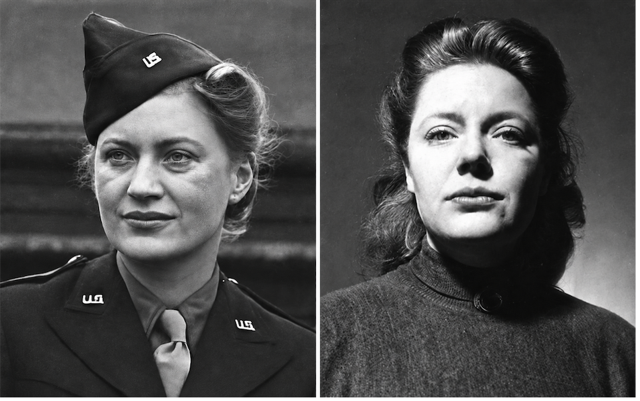
“What makes one man’s work better than another is his honesty.” Lee Miller
“Of course he shot a fucking elephant. He said he did. Why do you always doubt his fucking word!” Sonia Orwell
While researching George Orwell’s years in Paris, as a struggling writer and then a war correspondent, it occurred to me that he may have known the extraordinary, Lee Miller. If so, was it conceivable Miller may have snapped him in his British officer’s uniform in early 1945?
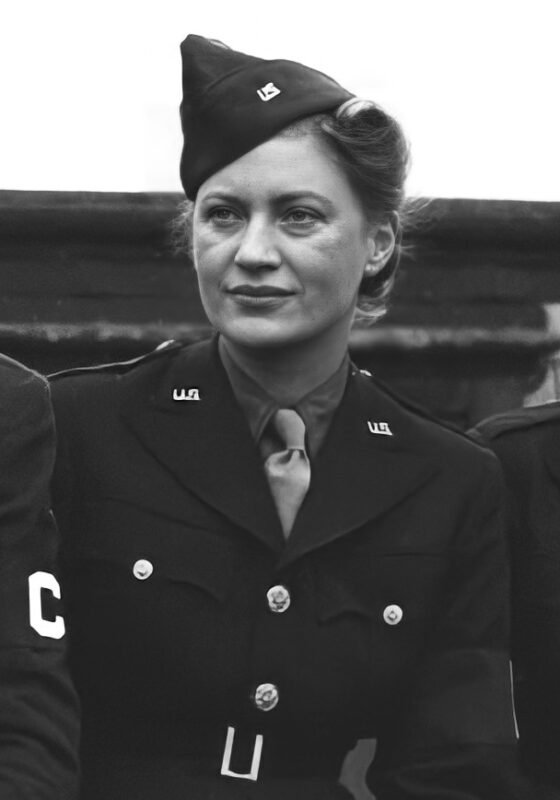
Circumstantial evidence that Orwell and Miller knew each other abounds but nothing that could be considered proof has emerged. They both lived in Paris during 1928-1929, later returning to document the liberation of the city and Allied advance into Germany. Miller’s husband, the surrealist artist Roland Penrose, knew many of Orwell’s professional acquaintances, lived in Hampstead and was particularly good friends with Herbert Read. Orwell wrote to Read, mentioning Penrose, in 1939:
“I doubt whether there is much hope of saving England from fascism of one kind or another, but clearly one must put up a fight, and it seems silly to be silenced when one might be making a row merely because one had failed to take a few precautions beforehand. If we laid in printing presses etc. in some discreet place we could then cautiously go to work to get together a distributing agency, and we could then feel “Well, if trouble does come we are ready.” On the other hand if it doesn’t come I should be so pleased that I would not grudge a little wasted effort. As to money, I shall probably be completely penniless for the rest of this year unless something unexpected happens. Perhaps if we definitely decided on a course of action your friend Penrose might put up something, and I think there are others who could be got to see the necessity. What about Bertrand Russell, for instance? I suppose he has some money, and he would fall in with the idea fast enough if he could be persuaded that free speech is menaced.”
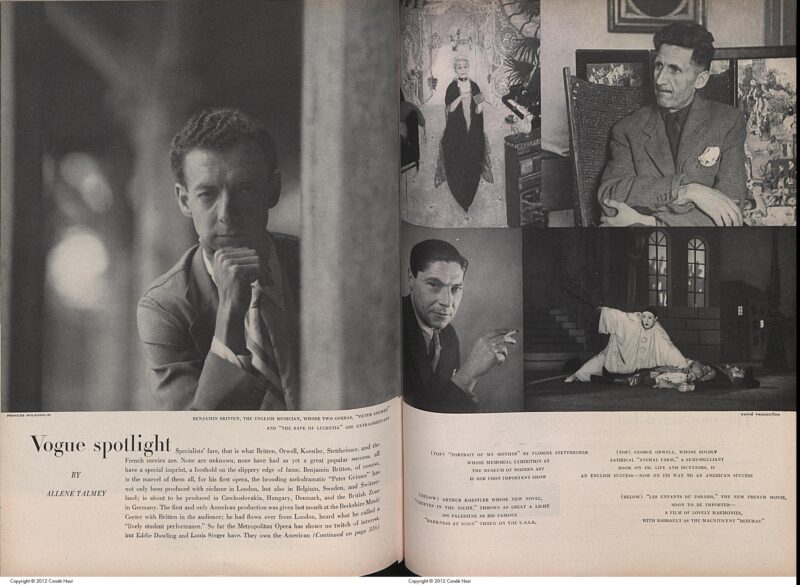
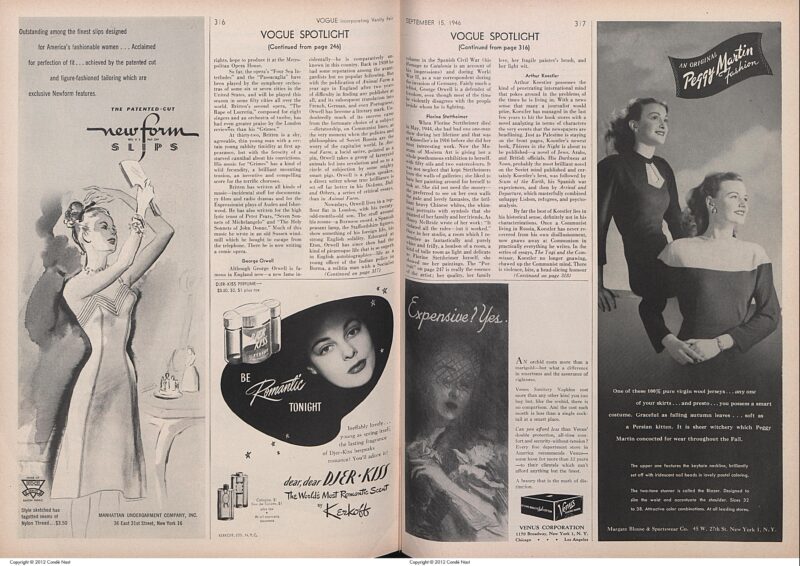
Allene Talmey, who was Lee Miller’s influential colleague at Vogue, had written a “spotlight” on Orwell in the magazine (15 September 1946) which included photos taken in his “top-floor flat in London, with his twenty-odd-months-old son”. This was the same year she travelled to Dublin with Miller for a Vogue feature on the Irish capital and James Joyce.
Encouragingly, while scouring the Orwell Archive in London, photographs of Sonia Orwell shot by Lee Miller came to hand. However, it was not until the pre-publicity for Lee, the biopic starring Kate Winslet, led me to read more widely that the penny dropped. Miller had a son who was happy to assist.
I now understand that Lee Miller and Sonia Orwell were close friends and there was a firm documentary record of their relationship.
Lee, Sonia & Antony
“Among the visitors to Farleys, Sonia was a great favourite of mine. Warm, funny and with a low-pitched slightly gravelly voice, she had this huge laugh that could be heard rooms away. She was not an affectionate maternal figure, but I had a great sense of connection to her as a child and later as a young adult.” Antony Penrose
Last year, Antony Penrose was generous with his time and anecdotes when I visited Farleys, the home where he grew up with his parents, Lee Miller and Roland Penrose. He moved with his parents from London to this farm in the Sussex countryside, which has become so central to his life, in 1949.
Antony was born in 1947. This promotional film, produced the year before that momentous and unexpected event (Lee had been told she was unable to have children), evokes the period and his parents’ careers, albeit in the staged-style of the period.
Antony provided me with a a copy of the Farley Farm Visitors Book (1949-1981) which revealed that Sonia Orwell first stayed in late December 1950 (the year Orwell died) for New Year’s Eve. She visited thirty-eight times with her last stay being in July 1975, two years before Lee Miller died. The names listed included some of the most famous artistic and literary figures of the twentieth century (including Picasso, Max Ernst, Paul Éluard, Man Ray & Peggy Guggenheim). There were also few of George Orwell’s friends and professional associates, most notably: Cyril Connolly, Hebert Read, Peter Watson and A. J. (Freddie) Ayer.
Antony’s anecdotes about Sonia, who had such wit and an outrageous sense of humour – were very fondly recounted. He loved playing practical jokes and Sonia would gladly oblige with appropriately loud shrieks in response to the fake turds, severed fingers, puddles of vomit, huge spiders and clockwork insects he deployed.
One story which Antony recounted about Cyril Connolly, the editor of Horizon and Orwell’s schoolfriend who lived nearby and often visited Farleys for lunch when Sonia was staying. It was not uncommon for guests to find Connolly an arrogant, supercilious and unpleasant man but he got his comeuppance on one memorable occasion from Lee. Connolly was waxing lyrical about those “horrible Americans” who had “the moral rectitude of a marshmallow” and he hoped they would all “drown in a sea of coca cola”. Lee, an American, ever-mischievous, made him a special dessert which he found delicious. When he asked about the dish, he was told the essential ingredients were “coke and marshmallows”!
As an adult reflecting on the people he met at Farleys, Antony recognised that Sonia had a particularly strong friendship with his mother and feels “they shared the torment of innumerable internal demons from unexpressed traumas in their lives”. He came to understand that “both women shared a deep distrust for authority in general and particularly in totalitarian regimes”.
Antony has written that Sonia’s friendship with his father – they had many friends in common – was more straight forward and there was “an easy flow of stimulating ideas”. John Hayward, a formidable scholar, that Orwell noted was the only person to have written a critical essay on P.G. Wodehouse was another of the guests often present when Sonia visited. There is correspondence between Roland and Sonia held in archives which will be challenging for me to read anytime soon (so please be in touch if you can assist).
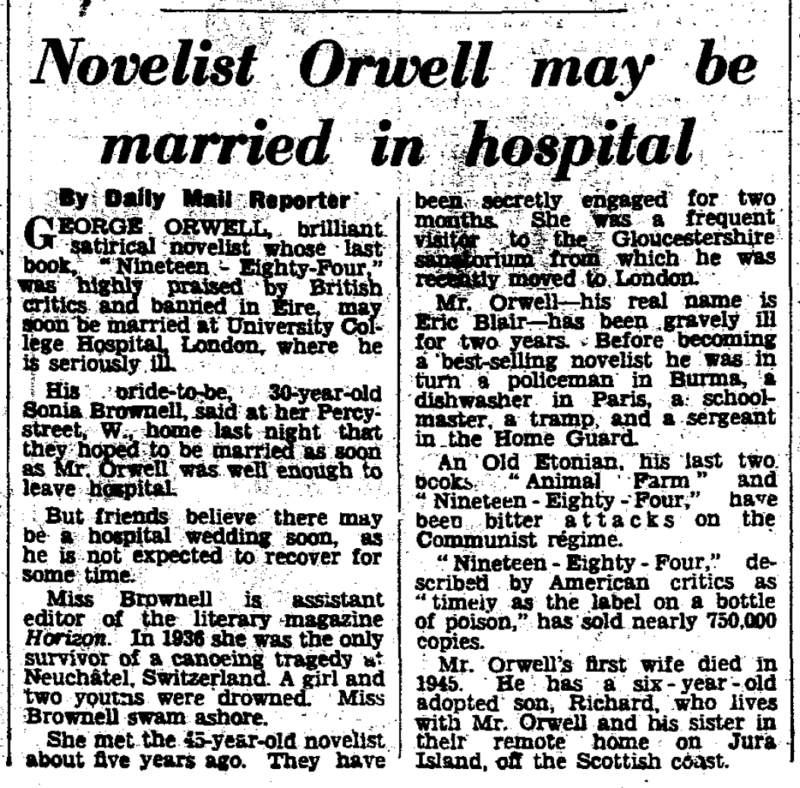
Multiple photos of Sonia can be found in the Lee Miller Archives. This one with Lee, Roland, Antony, Sonia, John Hayward and Edward Steichen is my favourite. I caught-up with Antony last month in Sydney for his presentation, Lee Miller: Hand grenades like Cartier clips. He mentioned that Steichen chose this photograph of Antony by his mother for ‘The Family of Man’ exhibition (1955).
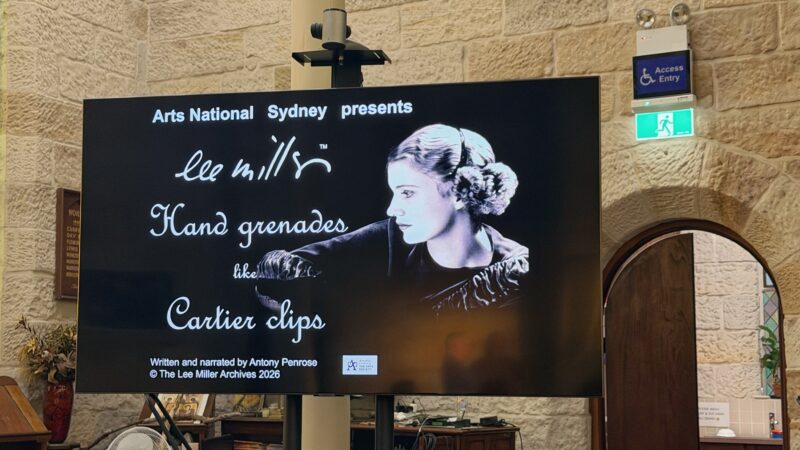
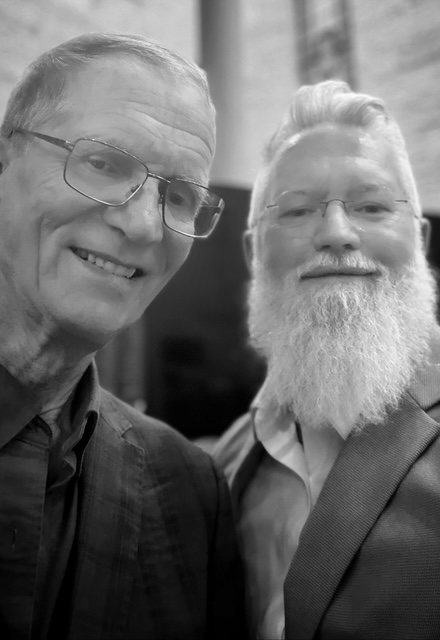
We both feel that Orwell must have met Lee but there is just no evidence. The most likely places would have been in Cologne or at the Hôtel Scribe.
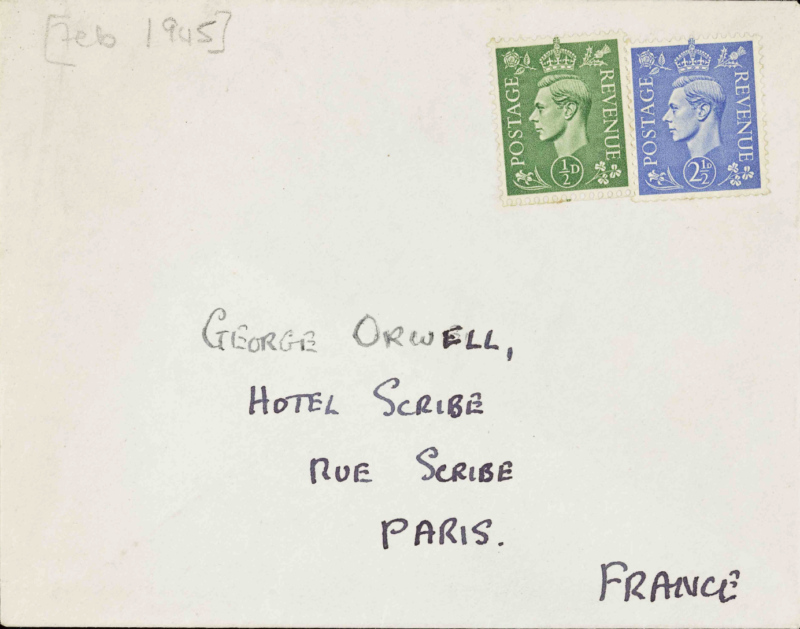
Hôtel Scribe was popular with the hordes of journalists and war correspondents who descended upon the city. It was Lee Miller’s base of operations from August 1944 until the end of the war and Orwell stayed there during February-June 1945. Floyd Davis captured the spirit and clientele in his painting, “Bar in Hôtel Scribe”, which appeared in a feature article for Life magazine on the 16th July 1945, “Paris 1945: Life’s artists show how the freed city has fared”.
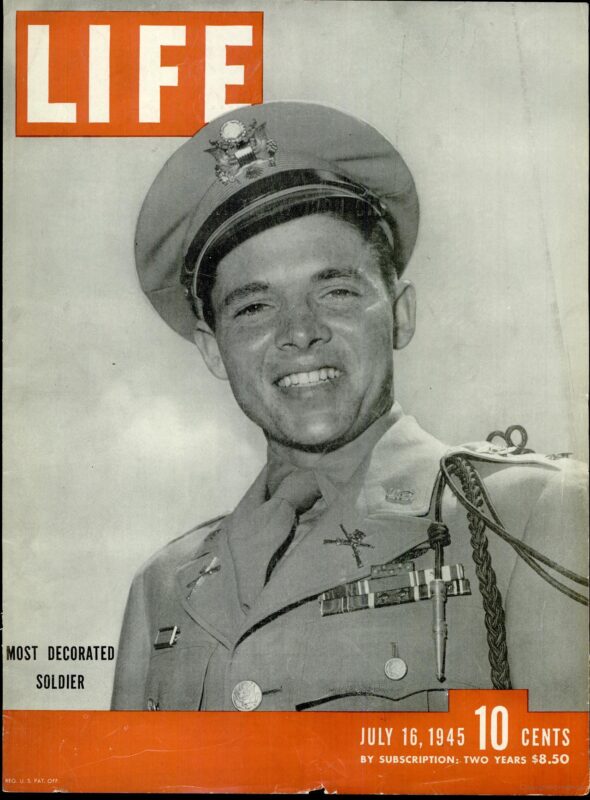
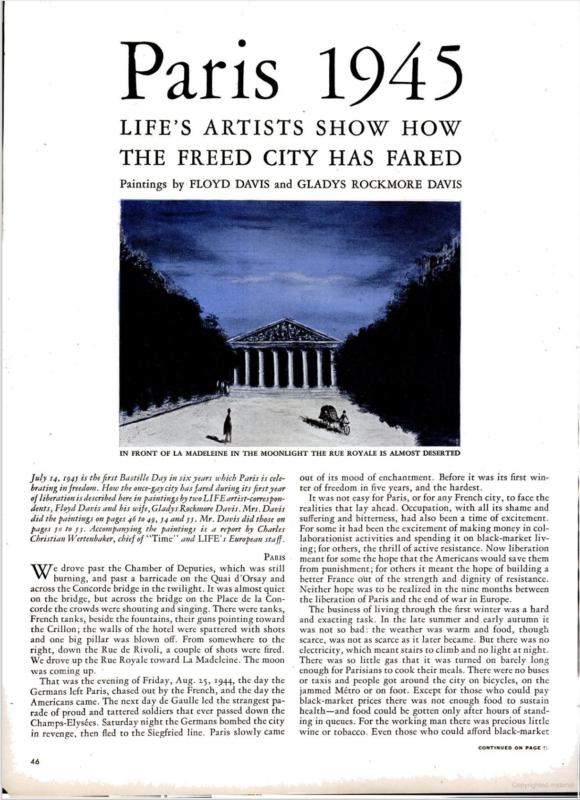
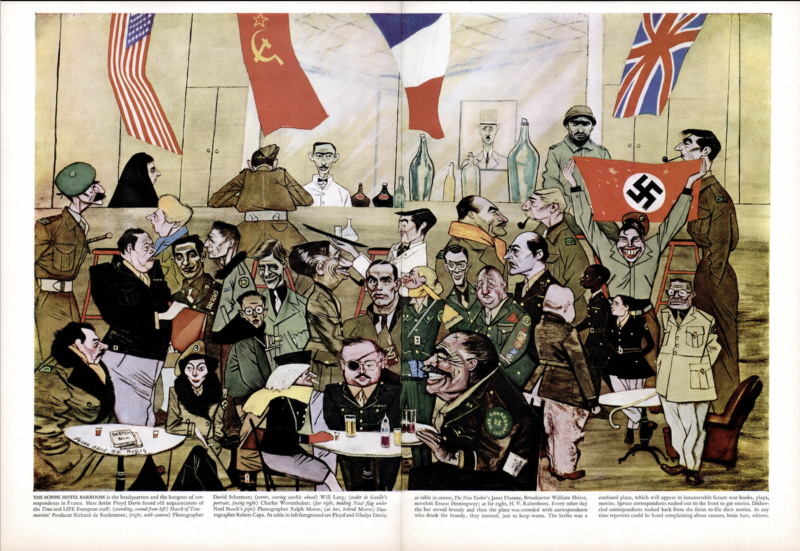
The caption describes the bar as “the headquarters and the hangout of correspondents in France” where the “spruce correspondents” who rushed out to the front were replaced by the “disheveled” returning to file their stories”. The caption lists David Scherman, Miller’s close colleague, along with many famous individuals, including Robert Capa, Janet Flanner, William Shirer and Ernest Hemingway – but no Orwell. Lee Miller, in a vibrant yellow scarf, is at the centre of the painting.
Although Davis’s group portrait appeared in Life during mid-1945, it was painted the year before. Orwell was still in London and absolutely not famous. It was not until the American publication of Animal Farm by the Book-of-the-Month Club in 1946 that he became more widely known.
Reflection
There’s so much more to write about in relation to Sonia Orwell and Lee Miller but this is just a brief post to share some basic information about their friendship.
If you are interested in learning more, Orwell’s Reports as War Correspondent in France, Germany and Austria from February until June 1945, is an excellent collection. Vogue‘s timeline has some fabulous shots of Lee and her own photography. The post-liberation treatment of the the French women, who co-habited with German soldiers and officers, was captured evocatively by Miller and Orwell also wrote about their degradation at the hands of Parisians after seeing this photo in The Star (29 August 1944). Miller’s photographs from the horror of Buchenwald and Dachau appeared in Vogue (June 1945).
Hilary Spurling’s biography of Sonia, contrasted with Michael Shelden’s representation of George Orwell’s second wife, will have you reflecting deeply on truth, gender, representation and biography. Orwell’s aunt, Nellie Limouzin, unlike many of his friends and biographers, wholeheartedly approved of the “very intelligent” Sonia as “certainly a most suitable companion for Eric”.
There are many good reads about Miller. You will find Antony Penrose’s books, The Lives of Lee Miller and Surrealist Weekends: Farleys in the Fifties, particularly engaging. The catalogue from the recent Tate Britain exhibition (which I visited last year) is a magnificent record of what was a brilliantly curated retrospective of Miller’s career.
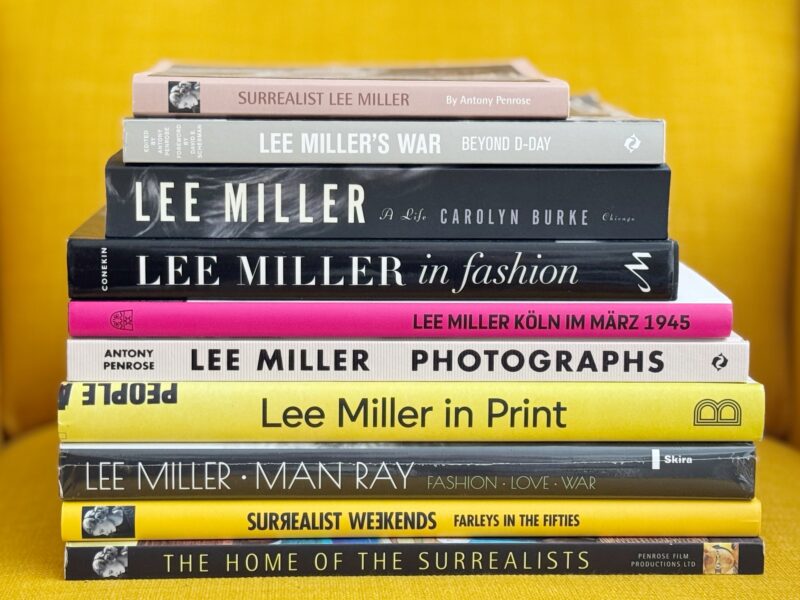
If you can find an affordable copy, Lee Miller: Köln im März 1945 documents a particularly challenging period of the war for the photographer. Orwell was also in Cologne during March filing “Creating Order Out of Cologne Chaos: Water Supplied from Carts” (The Observer, 25 March 1945). He fell ill in late March and then had to return home due to the tragic death of his wife, Eileen, on the 29th March, during an operation.
How Sonia and Lee met is not apparent. Possibly Roland Penrose may have been the conduit. The most likely other connections would be the British and French artists they both knew or the circle of intellectuals and writers associated with literary journal, Horizon. Sonia was Cyril Connolly’s editorial assistant with considerable responsibilities for running the journal during the 1940s and 1950s. A great beauty and intellect, Sonia modelled (and was known as the “Euston Road Venus”) for the artists who founded and attended the School of Painting and Drawing in London. She had close relationships with William Coldstream and Claude Rogers. Another possibility is that they met via Lucien Freud. Here is a photograph of Lee Miller with Freud in 1949.
Sonia’s life and times would make make a fabulous film, especially if it explored how the representations of her by Orwell’s friends and biographers have been so contested. Kate Winslet, who so successfully portrayed Lee Miller in 2023 biopic, would make a perfect Sonia!
Amy Batty, Antony’s daughter and Lee’s grand-daughter, has been a most generous and helpful correspondent. The work she has done preserving and developing Miller’s vast archive of negatives is culturally significant. I am still hoping that some day, one that is yet to be developed, will be of George Orwell in 1945.
REFERENCES
Coffield, Darren, Queens of Bohemia: And Other Miss-Fits, The History Press (Kindle Edition), 2024
Daily Mail, “Novelist Orwell may be married in hospital”, Saturday, 17 September, 1949
Farley Farm Visitors Book (1949-1981)
Floe, Hilary et al, Lee Miller, London: Tate Publishing, 2025
Limouzin, Nellie, Letters, SAT Archive
Orwell, George, Facing Unpleasant Facts: 1937–1939, The Complete Works of George Orwell – Volume 11, Secker & Warburg, 1998
Orwell, George, I Have Tried to Tell the Truth: 1943–1944, The Complete Works of George Orwell – Volume 16, Secker & Warburg, 1998
Orwell, George, I Belong to the Left: 1945, The Complete Works of George Orwell – Volume 17, Secker & Warburg, 1998
Orwell, George, Ruins: Orwell’s Reports as War Correspondent in France, Germany and Austria from February until June 1945, Comino-Verlag, 2021.
Penrose, Antony, The Lives of Lee Miller, Thames & Hudson (Kindle edition), 2024
Penrose, Antony, Surrealist Weekends: Farleys in the Fifties, Lee Miller Archives Publishing, 2022
Penrose, Roland, The Home of the Surrealists, Antique Collectors Agencies, 2025
Roberts, Hilary, Lee Miller: A Woman’s War, Thames & Hudson, 2015
Shelden, Michael, Orwell: The Authorised Biography, London: Heinemann, 1991
Spurling, Hilary, The Girl From The Fiction Department: A Portrait of Sonia Orwell, Hamish Hamilton, 2002
Stremmel, Kerstin, Lee Miller: Köln im März 1945, Köln: Greven Verlag, 2013
Talmey, Allene, “Spotlight”, Vogue, 15 September 1946
Wertenbaker, Charles Christian, “Paris 1945: Life’s artists show how the freed city has fared”, Life, 16 July 1945

Discover more from Darcy Moore
Subscribe to get the latest posts sent to your email.